TMJ Care: Chiropractic & Massage Therapy
Jaw pain can affect far more than your smile. Clenching, grinding, facial tension, headaches, neck discomfort, clicking, and difficulty opening your mouth comfortably can make eating, talking, sleeping, and getting through the day feel exhausting. At RVA Chiropractic & Wellness, we take a whole-body approach to TMJ-related discomfort by looking beyond the jaw itself—considering the muscles of the face, neck, shoulders, posture, movement, and the everyday stressors that may be contributing to tension.
Our TMJ-focused care thoughtfully combines chiropractic and massage therapy to support more comfortable movement and help calm overworked muscles. Each plan is individualized. We listen to your history, explain what we are assessing, and use gentle, targeted techniques based on your needs and comfort. Our goal is to give you supportive, conservative care and a clear path forward.
Understanding TMJ & TMD
The joint is small. Its impact can be significant.
The temporomandibular joints (TMJs) connect your jaw to your skull and work with a coordinated system of muscles, ligaments, and nerves to help you chew, speak, yawn, and move your jaw. “TMJ” is often used to describe jaw pain, but the more precise term is temporomandibular disorder (TMD)—a group of conditions that can affect the jaw joints, chewing muscles, and related tissues.
TMD symptoms can come and go and may have more than one contributing factor. Muscle overuse from clenching or grinding, stress, sleep habits, jaw injury, arthritis, bite changes, and neck or postural factors can all play a role. Because jaw symptoms can overlap with dental, ear, sinus, neurological, or other health concerns, a thoughtful assessment and the right referral are important.
Common symptoms include:
Jaw pain, tenderness, tightness, or fatigue
Clicking, popping, or grinding sounds with jaw movement
Difficulty or discomfort opening the mouth, chewing, or yawning
Facial pain or tension around the temples, cheeks, or ears
Headaches and tension that may involve the neck and shoulders
Clenching or grinding habits, especially during stress or sleep
Chiropractic Care for TMJ-Related Discomfort
Looking at the jaw in the context of the whole body
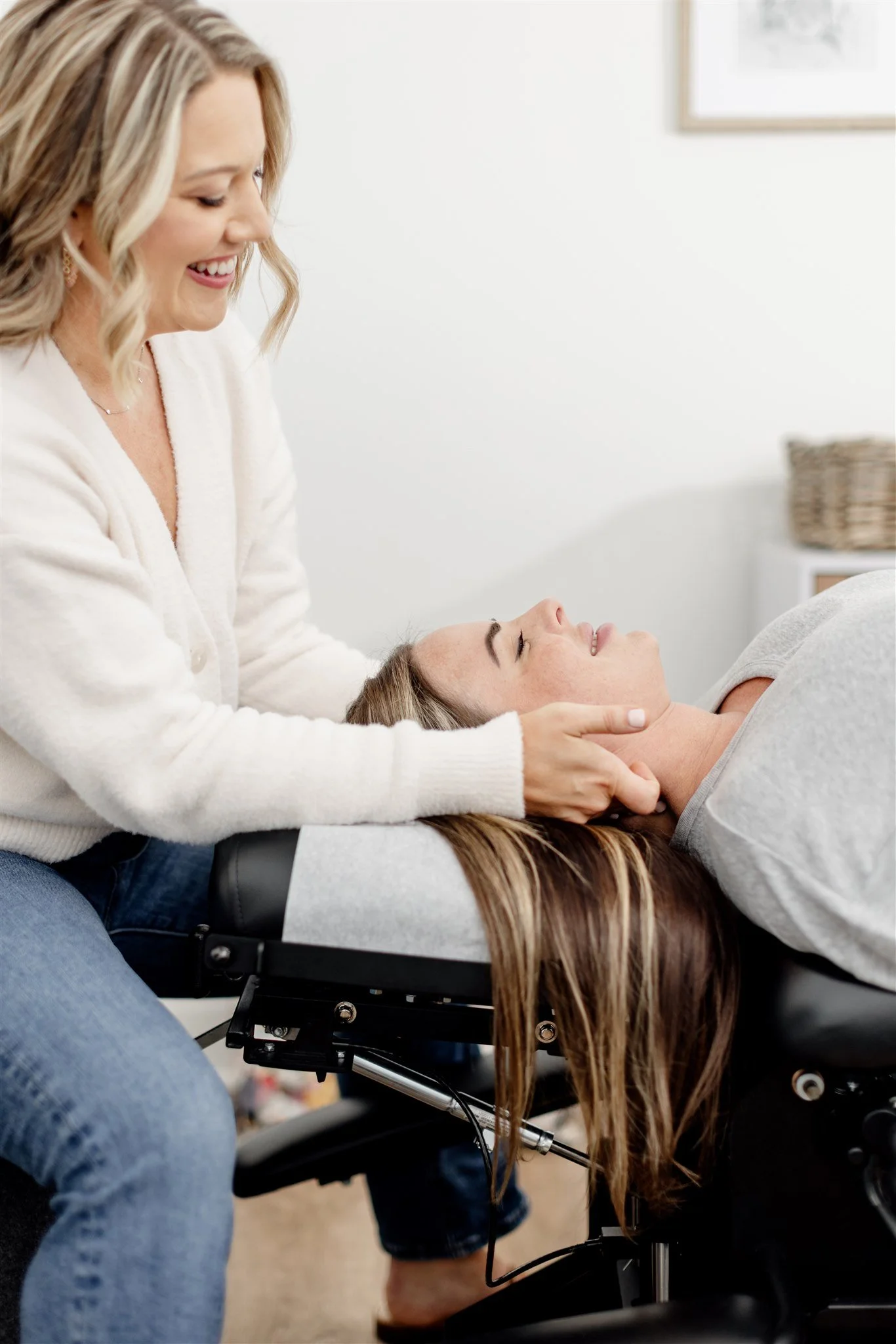
Because the jaw, head, neck, shoulders, and upper back work together, chiropractic care may be included as part of a conservative plan for TMJ-related musculoskeletal discomfort. Dr. Lisa will assess cervical and upper-back movement, posture, muscle tension, and the way these areas may be affecting your ability to move and rest comfortably. When appropriate, care may include gentle chiropractic adjustments, soft-tissue techniques, mobility support, and guidance for daily posture or movement habits.
Chiropractic care does not “retrain” the TMJ or guarantee that jaw pain will resolve. Instead, it can be one supportive option for addressing related musculoskeletal factors—especially neck and upper-body tension—while we work collaboratively with dentists, oral-health providers, physical therapists, and medical specialists when symptoms need additional evaluation or treatment.
TMJ-Focused Massage Therapy
Gentle work for the muscles that support your jaw
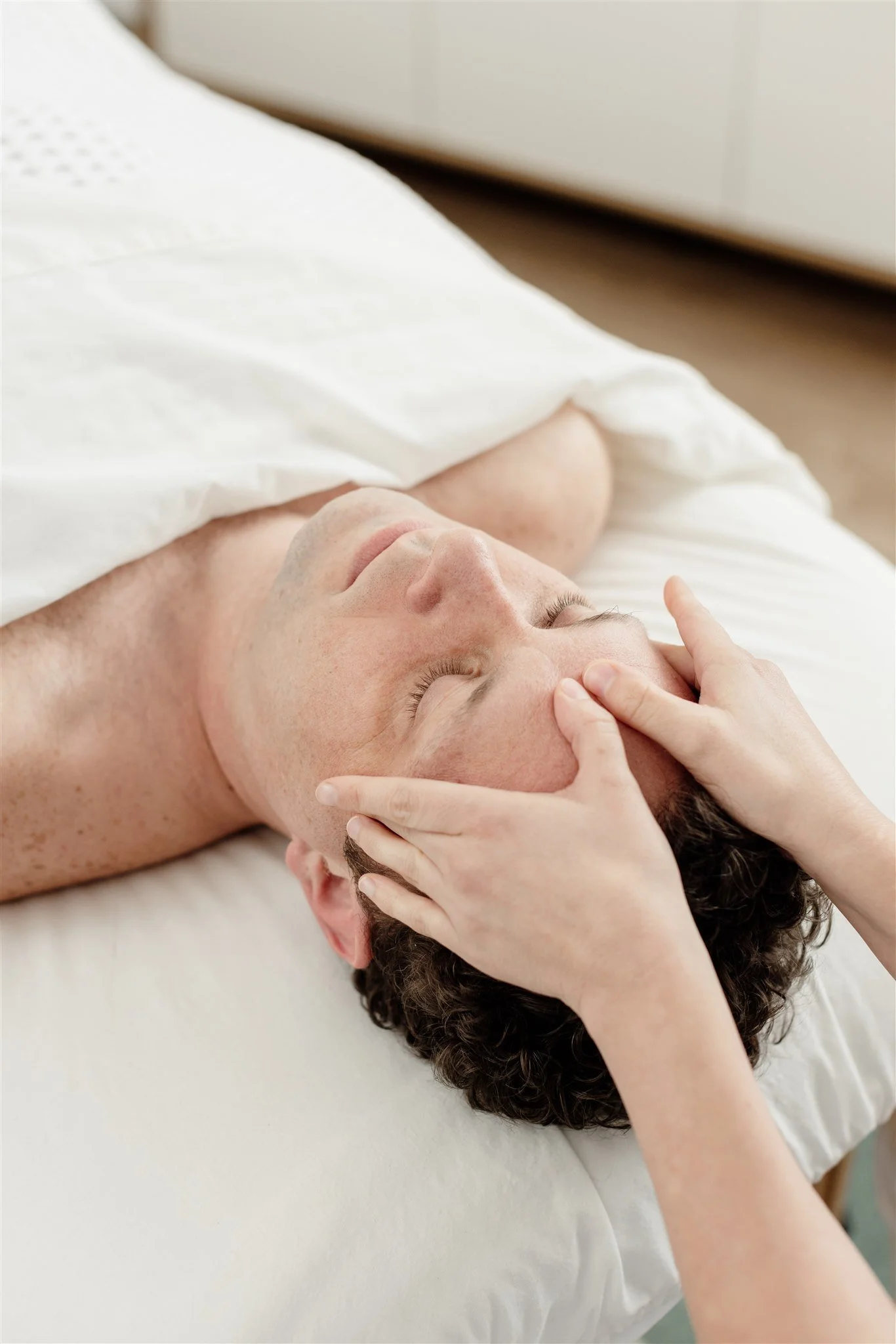
TMJ massage therapy focuses on tension in the jaw, face, neck, and shoulders. Using gentle, targeted soft-tissue techniques, your massage therapist works with the muscles that help control jaw movement—including areas that can become overworked with clenching, grinding, postural strain, and stress. The intention is to help reduce muscle guarding, support relaxation, and improve comfort with everyday jaw movement.
Depending on your needs and your explicit consent, care may include external work along the jaw, cheeks, temples, neck, and shoulders. It may also include intraoral work—gentle treatment inside the mouth to reach specific jaw muscles. Intraoral work is always optional. Your therapist will explain the technique beforehand, use appropriate hygiene practices, check in regularly, and stop or modify care at any time you request.
TMJ massage may support
Relaxation of tight jaw, facial, neck, and shoulder muscles
Comfort with chewing, talking, yawning, and other daily jaw movement
Relief of muscular tension associated with clenching or grinding
Improved awareness of areas that may be overworking or guarding
A calming, restorative complement to a broader TMD-care plan
Better Together
A coordinated approach to comfort and function
For many patients, combining TMJ-focused massage with chiropractic care allows us to address both local muscle tension and the connected movement patterns of the neck, shoulders, and upper body. Massage can focus on the soft tissues that feel tight and tender, while chiropractic care can support comfortable movement and address relevant musculoskeletal restrictions. Your plan may also include simple home strategies, such as gentle jaw exercises, posture awareness, stress-management practices, or temporary modifications to chewing habits when appropriate.
Research on manual therapy for TMD suggests that it may help reduce pain and improve mouth opening for some people, particularly when combined with therapeutic exercise. Results vary, evidence quality differs across techniques, and no single approach is right for everyone. We will recommend care based on your presentation, preferences, and response—not on a predetermined protocol.
Overall Benefits

Jaw, Face & Neck Support
Addresses connected areas of muscular tension and movement.

Gentle, Targeted Techniques
Care is adapted to your symptoms, comfort, and consent.

Whole Body Perspective
Considers posture, cervical movement, stress, and daily habits.
Collaborative Care
Coordinates with dental, medical, and other providers when appropriate.
What to Expect
Your first TMJ-focused visit begins with a conversation about your symptoms, clenching or grinding patterns, jaw movement, dental history, stress and sleep habits, prior injuries, and the care you are already receiving. We will explain our findings and discuss whether massage therapy, chiropractic care, or a combination may be appropriate for you.
You remain in control throughout care. We will explain any technique before using it and obtain your consent. If intraoral massage is being considered, your provider will discuss exactly what it involves, offer alternatives, and obtain separate, explicit consent. You may decline any part of treatment, ask questions, change your mind, or stop at any time.
We may recommend that you see a dentist, primary-care clinician, oral and maxillofacial specialist, physical therapist, or other provider, especially if you have significant bite changes, trauma, locking, suspected dental infection, severe or progressive symptoms, or symptoms that need diagnosis beyond our scope of care.
You do not have to keep carrying jaw tension alone.
Schedule a TMJ-focused consultation online today, and let us create a thoughtful plan to support more comfortable movement, relaxation, and everyday life.
FAQs
Is TMJ the same as TMD?
TMJ refers to the temporomandibular joint itself. TMD, or temporomandibular disorder, is the broader term for conditions involving the jaw joint, chewing muscles, and related tissues. Many people use “TMJ” to describe jaw pain or dysfunction.
What is intraoral TMJ massage?
Intraoral massage is gentle manual work performed inside the mouth to access specific jaw muscles. It is optional and is only performed after your therapist explains the technique and receives your explicit consent. External treatment options are always available.
What can I do at home?
Your plan may include gentle movement, posture awareness, relaxation strategies, jaw-rest reminders, or temporary changes to chewing habits. Avoid aggressive self-treatment or extreme jaw stretching unless a qualified provider has recommended it for you.
Can chiropractic and massage cure my TMJ disorder?
Chiropractic and massage therapy may be supportive conservative options for muscular tension, movement, and pain, but TMD can have several contributing factors. Some people also need dental, medical, behavioral-health, physical-therapy, or oral-specialist care.
When should I seek other medical or dental care?
Seek prompt evaluation for a jaw injury, inability to open or close your mouth, jaw locking, swelling, fever, dental pain or suspected infection, sudden bite changes, facial weakness or numbness, severe headache, chest pain, or severe or worsening symptoms.
Will I need a night guard?
A night guard is a dental decision. If grinding, clenching, tooth wear, bite changes, or other dental concerns are present, we may recommend discussing them with your dentist. We do not prescribe dental appliances.